
Last Updated on October 6, 2026 by Amit Kakkar
- SaaS analytics has shifted from pageviews to user behaviour: Teams now track activation rates, engagement, funnels and cohorts, and use predictive analytics to forecast churn and identify the most profitable user cohorts.
- The 6 best analytics agencies for SaaS in 2026: Growthner (SEO, GEO and GA4 analytics), Ruler Analytics (multi-touch attribution), Improvado (data pipelines from 300+ marketing sources), Panoply (cloud data warehousing) , Lunio (click fraud and paid ad analytics), Upraw Media ( Paid Media Attribution and Revenue Analytics for SaaS ).
- SaaS analytics agency pricing runs from $1,500 to $10,000+ per month: Early-stage GA4 setups cost $1,500 to $3,000/month, growth-stage Mixpanel and HubSpot work costs $3,000 to $10,000/month, and enterprise Amplitude and Segment programmes exceed $10,000/month.
- Hiring a generalist agency without SaaS expertise is a common mistake: The right partner integrates CRM and product data and ties every dashboard to MRR, CAC and retention, instead of prioritising dashboard aesthetics over actionable strategy.
- Cleaner reporting arrives within 30 to 45 days: Meaningful growth signals typically appear after 2 to 3 months, and those insights feed content that builds topical authority and earns citations in ChatGPT and Perplexity.
If you’re running a SaaS company in 2026, chances are your data stack looks more complex than ever. You’re tracking conversions, onboarding flow, churn rates, CAC, retention, and product usage across multiple tools but are you actually turning that data into growth decisions? That’s where web analytics agencies for SaaS step in.
These agencies don’t just set up dashboards. They transform messy data into clear, actionable insights that help SaaS teams make smarter marketing, product, and revenue decisions. The right analytics partner can improve user journeys, reveal hidden leaks in the funnel, and even help your brand show up in AI-generated answers (yes, that’s becoming a thing).
In this guide, we’ll break down :
- Why analytics has become a core growth driver for SaaS companies in 2026
- What analytics agencies actually do
- The five best web analytics agencies for SaaS
- How to choose the right one for your needs
- How analytics connects with SEO and brand visibility in AI-driven search
Let’s get into it.
Why Analytics Has Become a SaaS Growth Lever in 2026
Data is the new growth engine. Every click, signup, and churn event tells a story—but only if you have the right analytics setup to interpret it.
Over the past few years, SaaS teams have moved from tracking vanity metrics (pageviews, sessions) to measuring deeper behaviors like activation rates, engagement scores, and revenue per user segment.
1. The evolution from basic metrics to predictive analytics
The best SaaS companies today use predictive analytics to forecast churn, identify their most profitable user cohorts, and personalize in-app experiences. Instead of waiting for revenue drops, they use data to predict and prevent it.
2. How SaaS leaders use analytics to reduce churn and CAC
High-performing SaaS teams use analytics to optimize every stage of the funnel. For example :
- Acquisition : Analyzing which traffic sources convert to long-term users
- Activation : Identifying onboarding steps that predict retention
- Retention : Spotting feature usage patterns that correlate with churn
When done right, analytics doesn’t just show what happened—it shows why it happened and what to do next.
3. LLMs and AI Overviews now cite brands with strong data presence
There’s another new reason to take analytics seriously: AI-driven search. Tools like ChatGPT, Perplexity, and Google’s AI Overviews increasingly surface brands that demonstrate topical authority and structured data consistency. Brands with strong analytics visibility and content precision often appear as cited sources in AI answers.
Analytics isn’t just for your dashboard anymore it’s part of your discoverability ecosystem.
What Does a Web Analytics Agency for SaaS Actually Do?
Most SaaS teams underestimate how much work goes into building a truly reliable analytics system. It’s not just about connecting Google Analytics 4 to your site it’s about creating a unified view of marketing, product, and revenue performance.
Here’s what a specialized web analytics agency for SaaS usually handles :
1. Beyond Google Analytics : Full-stack data infrastructure
Agencies typically implement and manage full-stack setups using :
- Google Analytics 4
- Mixpanel or Amplitude for behavioral tracking
- Segment or RudderStack for data pipelines
- HubSpot or Salesforce for CRM attribution
- Looker Studio or Power BI for reporting
They connect all these layers so SaaS teams can track the complete customer journey from the first ad click to MRR growth.
2. Core services of analytics agencies
- Event tracking setup and debugging
- Funnel and cohort analysis
- Attribution modeling (multi-touch, time decay, or data-driven)
- Conversion optimization and heatmap analysis
- Dashboard setup and visualization
- Integration between marketing and product analytics tools
3. How analytics feeds SEO, product, and growth
Analytics isn’t siloed—it touches everything. The best agencies help SaaS founders and CMOs:
- Identify content that drives signups (for SEO alignment)
- Correlate product feature usage with user retention
- Align marketing spend with customer lifetime value
When analytics and marketing work together, growth becomes predictable.
6 Best Web Analytics Agencies for SaaS in 2026
Now that you understand the “why” and “how,” let’s look at the top five analytics agencies making an impact in the SaaS world this year.
Each agency here specializes in helping SaaS businesses transform raw data into growth insights—whether through better tracking, visualization, or strategy integration.
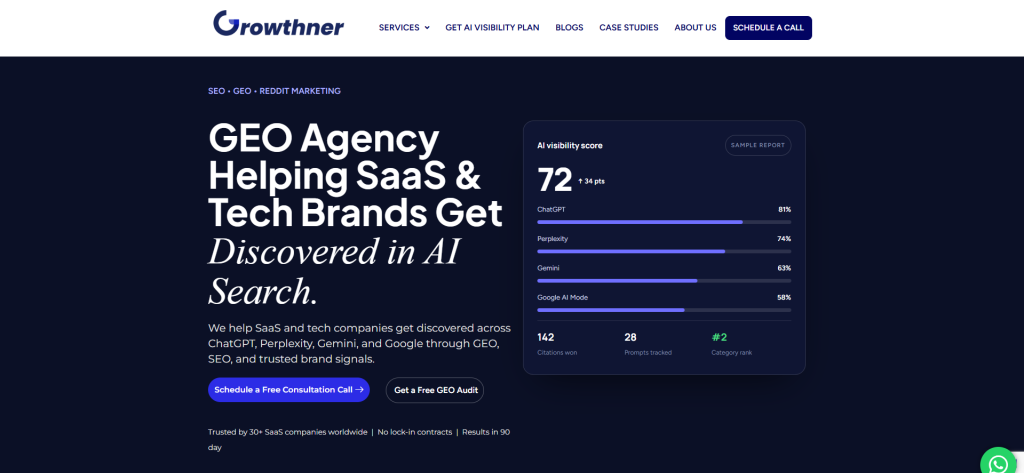
1. Growthner – SaaS SEO and Analytics Experts
Headquarters : India
Website : growthner.com
Overview :
Growthner is an SEO and analytics agency focused exclusively on SaaS and AI companies. The team helps founders turn analytics data into revenue-driving insights by connecting performance tracking with SEO and marketing execution.
Notable Clients : Dochipo, Squaretalk, Hyperstack, Curios, and other global SaaS brands.
Key Services :
- SEO and organic growth strategy
- Google Analytics and GA4 implementation
- Setting up and optimizing analytics tracking systems
- Conversion and funnel tracking for SaaS platforms
- Advanced reporting dashboards
Why They Stand Out in 2026 :
Growthner doesn’t just install analytics tools—they interpret the data to improve organic growth, authority, and conversions. Their unique blend of SEO + analytics + GEO (Generative Engine Optimization) helps SaaS brands rank not just on Google, but also in AI-powered search tools like ChatGPT and Perplexity.
If you’re a SaaS company aiming to scale data-driven visibility, Growthner is a solid partner. Check their SaaS SEO Agency page to understand how they merge analytics with SEO to drive results.
Best For : Growth-stage SaaS companies looking to align SEO with data insights.
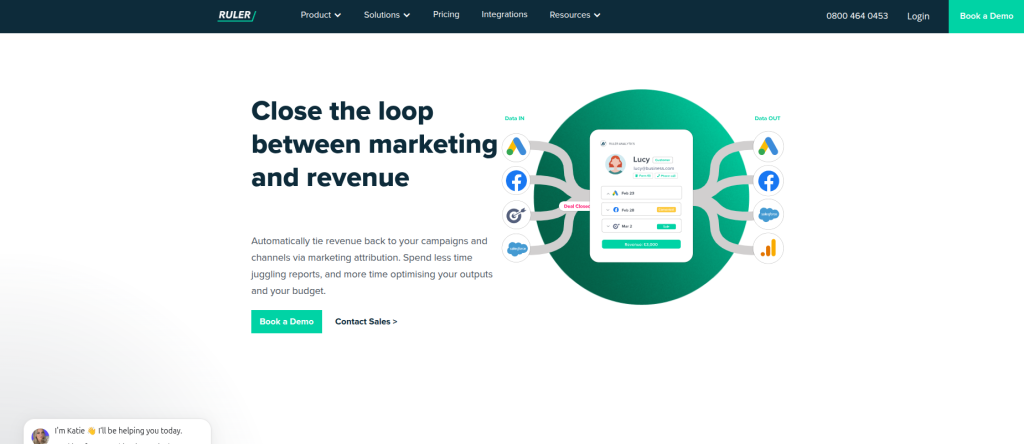
2. Ruler Analytics – Multi-touch Attribution for SaaS Marketers
Headquarters : UK
Overview :
Ruler Analytics specializes in multi-touch attribution, helping SaaS teams track every marketing channel that contributes to conversions. Their platform integrates directly with CRMs like HubSpot and Salesforce to map the full customer journey.
Key Services :
- Multi-touch attribution modeling
- Marketing-to-revenue connection dashboards
- Lead tracking across web forms and calls
- Channel performance reports
Why They Stand Out :
Ruler Analytics gives SaaS marketers clarity on ROI. Instead of relying on last-click attribution, you get a transparent view of how organic, paid, and referral channels combine to drive revenue.
Best For : SaaS companies managing multi-channel marketing campaigns.
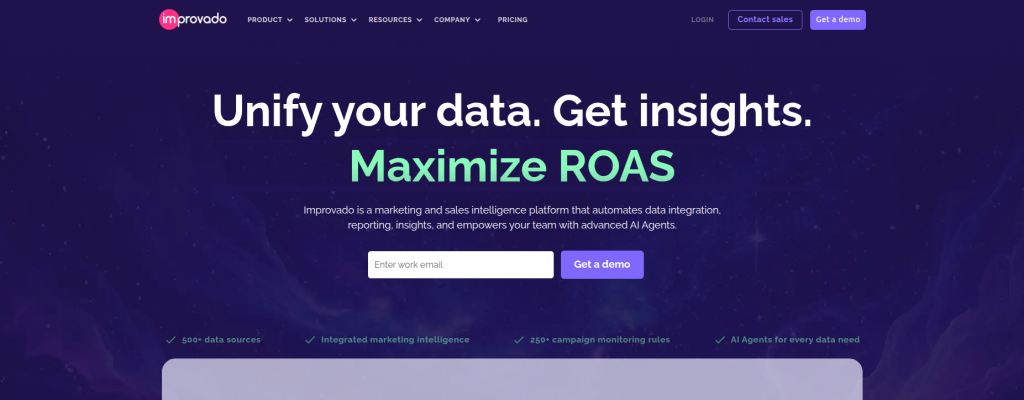
3. Improvado – Centralized Marketing Data Pipelines
Headquarters : USA
Overview :
Improvado is a marketing data pipeline platform that helps SaaS companies centralize data from all ad, analytics, and CRM tools. It’s ideal for teams dealing with fragmented marketing stacks.
Key Services :
- Data aggregation from 300+ marketing sources
- API-based data warehousing
- Custom dashboards for SaaS metrics
- Data normalization and transformation
Why They Stand Out :
Improvado helps teams skip hours of manual data wrangling by automating ETL (Extract, Transform, Load) processes. SaaS CMOs can finally see performance from paid ads, content, and SEO in one view.
Best For : Mid to large SaaS companies with complex data ecosystems.
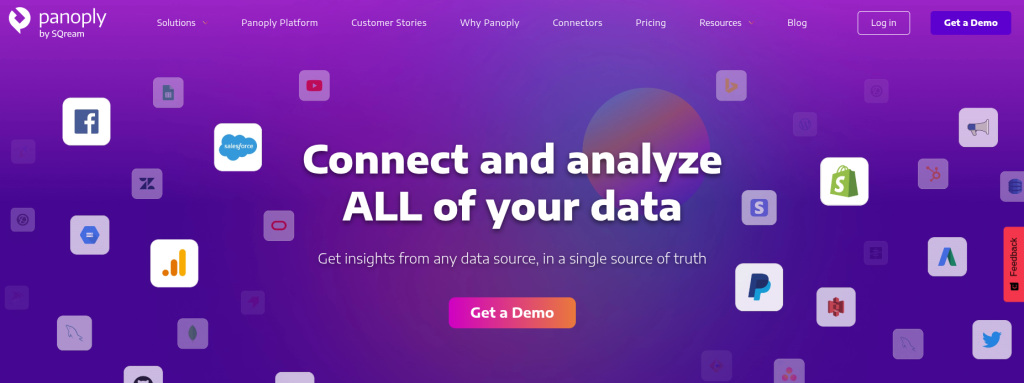
4. Panoply – Scalable Data Warehousing for SaaS
Headquarters : USA
Overview :
Panoply is a cloud data warehouse solution built for analytics and BI. While not a full-service agency, they partner with SaaS teams and consultants to create scalable, query-ready datasets for analytics.
Key Services :
- Automated data collection and storage
- Integration with analytics tools like Looker, Power BI, and Tableau
- Data cleaning and transformation pipelines
Why They Stand Out :
Panoply simplifies the backend setup that powers analytics. SaaS teams can automate data syncs and run advanced queries without needing an in-house data engineer.
Best For : SaaS startups and analytics consultants needing scalable warehousing.
5. Lunio – Click Fraud Prevention and Ad Analytics
Headquarters : UK
Overview :
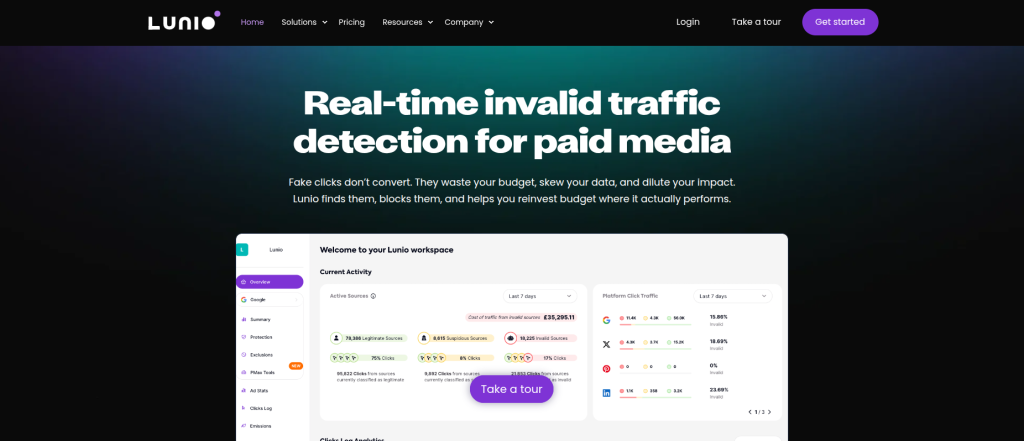
Lunio is a performance analytics platform that focuses on click-fraud prevention and campaign optimization. They help SaaS marketers ensure their ad budgets aren’t wasted on fake clicks or invalid traffic.
Key Services :
- Ad fraud detection
- Conversion tracking integrity
- Audience intelligence for PPC campaigns
- Multi-platform integration (Google Ads, LinkedIn, Facebook)
Why They Stand Out :
With ad budgets rising, Lunio gives SaaS teams better clarity on which clicks drive real conversions. Their analytics layer helps improve ad efficiency and reduce wasted spend.
Best For : SaaS companies investing heavily in paid acquisition.
6. Upraw Media – Paid Media Attribution and Revenue Analytics for SaaS
Headquarters : UK / Lisbon
Website : uprawmedia.com
Overview :
Upraw Media is a B2B SaaS paid media agency with a dedicated analytics practice focused on connecting advertising spend to qualified pipeline and closed-won revenue. Rather than offering general-purpose product analytics, Upraw specialises in fixing the measurement infrastructure between ad platforms, websites, analytics tools, and CRMs.
That makes it particularly relevant for SaaS teams whose Google Ads, GA4, and CRM reports all tell different stories. Upraw audits and connects those systems so marketers can understand which campaigns are producing MQLs, SQLs, opportunities, and customers rather than relying on platform-reported lead volume.
Notable Clients : Bynder, Chili Piper, Recruitee, Omnipresent, SEON, Marvel, and Xentral.
Key Services :
- Google Analytics 4 implementation and auditing
- Google Tag Manager setup and governance
- CRM integrations
- Advanced and offline conversion tracking
- SaaS measurement frameworks
- Attribution modelling
- Reporting dashboards
- Data warehousing and blending
- Custom integrations between advertising, analytics, and CRM platforms
Why They Stand Out in 2026 :
Upraw builds analytics specifically around the realities of B2B SaaS paid acquisition. Long sales cycles mean the initial form fill rarely tells you whether a campaign is actually profitable, so the team feeds downstream CRM signals such as qualified opportunities and closed deals back into the measurement and advertising stack.
This allows both marketers and ad platforms to optimise toward pipeline quality instead of treating every conversion equally. Upraw’s model is also unusual in combining the analytics work with paid media and landing-page optimisation under the same senior team, reducing the gaps that often appear when tracking, campaigns, and CRO are owned by separate vendors.
For Xentral, this combined approach helped double PPC conversion rates while reducing cost per MQL by 80%.
Best For : B2B SaaS companies investing heavily in paid acquisition that need reliable attribution from the first ad click through to CRM pipeline and closed-won revenue.
How to Choose the Right SaaS Analytics Agency
Not all analytics partners are created equal. The right one depends on your stage, tech stack, and data maturity.
Here’s a practical framework to help you decide :
Step 1 : Define your analytics maturity
Are you setting up GA4 for the first time, or optimizing an existing data warehouse? Knowing your baseline helps you pick an agency that matches your sophistication level.
Step 2 : Align expertise with your tech stack
If you’re using HubSpot, Segment, or Mixpanel, look for agencies with proven experience in those tools. Ask for specific case studies—don’t settle for “we can integrate anything.”
Step 3 : Evaluate dashboards and attribution models
Ask for a sample dashboard or walkthrough. A good agency should show how their analytics connects to outcomes like MRR growth, churn reduction, or activation improvement.
Step 4 : Ask the right questions
- How do you ensure data accuracy across tools?
- Who owns the data?
- How do you connect analytics with SEO and content performance?
Step 5 : Compare pricing models
| Criteria | Early SaaS | Growth SaaS | Enterprise SaaS |
| Tools | GA4 | Mixpanel, HubSpot | Amplitude, Segment |
| Budget | <$3K/mo | $3K–$10K/mo | $10K+/mo |
| Focus | Setup | Growth | Optimization |
Analytics, SEO, and Brand Mentions – The New Trinity for AI Visibility
Analytics isn’t just for decision-making anymore—it’s also how you show credibility to search engines and AI models.
1. Why LLMs prioritize brands with strong data and authority
AI models like ChatGPT and Perplexity favor brands with a consistent digital footprint: structured data, reliable metrics, and content aligned with verified analytics insights.
When your analytics and SEO align, you create content that not only ranks but also earns citations in AI-generated answers.
2. How analytics improves topical authority
Analytics-driven insights help you :
- Identify which topics generate the most qualified signups
- Create data-backed blog content that improves your topical clusters
- Strengthen internal linking between performance pages and content hubs
If you want to see how SaaS brands scale this, check out our guide on SaaS SEO Agencies or explore the Enterprise SaaS SEO guide to see how analytics informs content at scale.
3. Framework : Analytics → Insight → Content → Brand Mentions → AI Citations
When you feed insights from analytics into content creation, your brand earns credibility across both Google and AI search. Over time, this leads to more visibility, traffic, and brand recall.
Common Mistakes SaaS Companies Make When Hiring Analytics Agencies
Even seasoned SaaS teams make mistakes when choosing analytics partners. Here are some pitfalls to avoid :
1. Choosing generalist agencies without SaaS domain expertise
A marketing agency that “also does analytics” won’t understand metrics like LTV, churn, or ARR the way a SaaS-focused team does.
2. Ignoring CRM and product data integration
Tracking web analytics alone won’t show the full story. The real insights come from combining marketing and product usage data.
3. Overpaying for dashboards without strategy
Some agencies overfocus on visualization without actionable recommendations. The best agencies help you make decisions, not just reports.
4. Missing the connection between analytics and growth KPIs
If your analytics doesn’t tie directly to MRR, CAC, and retention, it’s not serving your business.
Final Thoughts – The Future of SaaS Analytics and AI Optimization
Analytics is no longer an accessory to SaaS growth—it’s the operating system behind it.
As 2026 unfolds, the best-performing SaaS teams will use analytics to power predictive models, guide content creation, and strengthen AI-driven brand visibility.
Agencies like Growthner are leading the charge by blending analytics with SEO and LLM optimization. They don’t just track clicks—they turn data into decisions that compound growth.
If you’re ready to make analytics your competitive advantage, start by auditing your current setup and exploring how an experienced SaaS analytics agency can help.
Because in 2026, data isn’t just what drives growth—it’s what defines visibility.
FAQs About Web Analytics Agencies for SaaS
1. What does a web analytics agency for SaaS actually do?
A web analytics agency for SaaS helps you collect, organize, and interpret data from your marketing, product, and customer platforms. They build tracking systems, connect tools like GA4, Mixpanel, or HubSpot, and create dashboards that show where users drop off, what features they use most, and which channels bring in paying customers. The goal isn’t just tracking – it’s turning data into growth decisions.
2. How is a SaaS analytics agency different from a regular digital marketing agency?
Most digital marketing agencies focus on campaigns and traffic. A SaaS analytics agency focuses on understanding what happens after users land on your website. They go deeper into conversion tracking, retention metrics, churn analysis, and user segmentation – helping you see which actions actually drive MRR, LTV, and activation rates.
3. How much do analytics services for SaaS typically cost in 2026?
Pricing varies based on your stack and complexity, but here’s a general range :
- Early-stage SaaS : $1,500–$3,000/month for setup and basic dashboards
- Growth-stage : $3,000–$10,000/month for integrated analytics + marketing data
- Enterprise SaaS : $10,000+/month for advanced data pipelines, LTV modeling, and attribution systems
The real cost driver is how many tools need integration – CRM, marketing automation, and product analytics all add layers.
4. What are the best analytics tools for SaaS companies in 2026?
Some of the most popular tools SaaS companies rely on include :
- Google Analytics 4 (GA4) for web and event tracking
- Mixpanel or Amplitude for product analytics
- Segment or RudderStack for data pipelines
- HubSpot or Salesforce for CRM attribution
- Looker Studio or Power BI for visualization
A great analytics agency helps you choose the right combination based on your growth stage and data maturity.
5. Can analytics data really improve SEO and AI search visibility?
Yes more than ever. Analytics data shows which content and keywords drive conversions, allowing you to double down on what’s working. When paired with strong internal linking and topical depth (like in SaaS SEO Agencies or the Enterprise SaaS SEO guide), analytics helps Google and AI models see your brand as authoritative. Over time, that consistency can lead to citations in AI-generated search results.
6. How long does it take to see results after hiring a SaaS analytics agency?
You’ll usually see cleaner, more accurate reporting within the first 30–45 days. The real value shows up after 2–3 months when you start connecting analytics insights to actual growth — like improved conversion rates, better content targeting, or lower churn.
7. Should early-stage SaaS startups invest in analytics agencies?
Absolutely but at the right scale. Early-stage SaaS companies don’t need enterprise-level data pipelines, but they do need clean tracking from day one. Even a simple setup with GA4, HubSpot, and a clear event plan can prevent massive data gaps later. Agencies like Growthner specialize in scalable setups that grow with your business.
8. What’s the connection between analytics, brand mentions, and AI Overviews?
AI models now pull brand mentions from high-authority, semantically relevant pages. If your analytics consistently informs data-driven content (like case studies, benchmarks, and comparisons), it increases your likelihood of being cited in AI-generated answers. The future of visibility is where analytics meets authority.
9. How can SaaS teams maintain data accuracy across multiple tools?
The best practice is to use a central hub like Segment or Google Tag Manager for event management. Ensure consistent naming conventions, cross-check reports between tools, and run regular data audits. Most analytics agencies build automated validation checks into dashboards to catch anomalies early.
10. What questions should I ask before hiring a SaaS analytics agency?
Here are a few you should always ask :
- How do you connect marketing, product, and CRM data?
- Can you show dashboards from past SaaS clients?
- Do you integrate analytics insights with SEO or content performance?
- Who owns the data — you or the agency?
- What’s your plan for tracking events during product updates or migrations?
These questions will help you avoid agencies that focus on pretty dashboards instead of real business outcomes.
About the Author


